
The Rise and Ruin of George Reynolds: How One Man’s Dream Buried Darlington FC
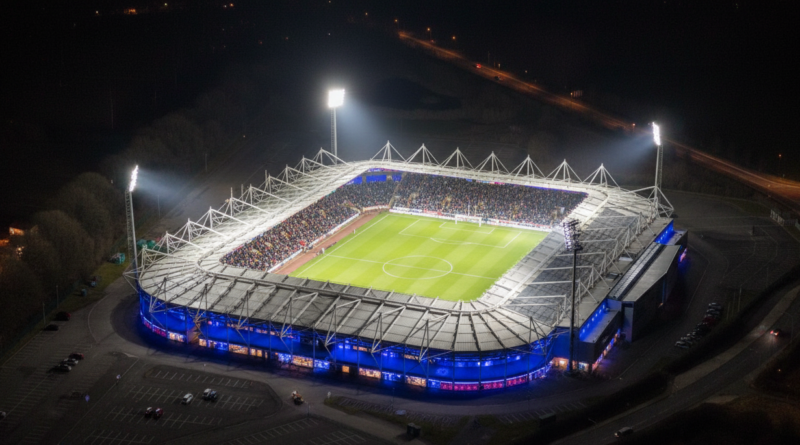
When Hull City moved into the KC Stadium in 2002, it marked the start of the club’s ascent from League Two to the Premier League. Just months later, another northern club unveiled its own state-of-the-art ground — a 25,000-seater arena that looked every bit Premier League ready. The only problem? That club was Darlington FC, a team playing in English football’s fourth tier.
This is the story of how George Reynolds — a safe-cracker turned millionaire, turned football messiah — built one of English football’s most spectacular stadiums and, in doing so, destroyed the very club he wanted to save.
A Football Dream Born in the Wrong Town
For over a century, Darlington FC played at Feethams, a quaint, characterful ground shared with a cricket pitch and cherished by generations of fans. It wasn’t glamorous — muddy winters left the pitch unplayable — but it was home.
When George Reynolds arrived in 1999, Darlington were on the brink of financial collapse. The former kitchen worktop tycoon arrived in a Rolls-Royce and a three-piece suit, promising to clear the club’s debts and take them all the way to the Premier League. Within days, he wrote a £5 million cheque, declared that “failure is not in my vocabulary,” and announced plans for a 25,000-seat stadium.
Darlington supporters, long starved of hope, were captivated. Season ticket sales shot up, shirts flew off shelves, and fans dared to believe. But beneath the glamour was a plan built on fantasy, not finance.
The Man Behind the Madness
George Reynolds’s backstory sounded like a Hollywood script — though perhaps one directed by Guy Ritchie. Born into poverty in Sunderland in 1936, he was raised in an orphanage, turned to crime as a teenager, and spent years in prison for safe-cracking and burglary. It was behind bars that he taught himself to read and reinvented his life.
After his release, Reynolds launched businesses in nightclub fittings and eventually kitchen worktops, turning a small venture into a multimillion-pound empire. Flashy and fiery, he lived large — a mansion in County Durham, diamond rings, a Rolls-Royce, even a £2 million helicopter. He described himself as “a mix between Richard Branson, Brian Clough, and Fletch from Porridge.”
There were two sides to Reynolds: the generous boss who paid off employees’ mortgages and the bully who allegedly threatened journalists and critics. Darlington would see both.
From Football Savior to Football Folly
Reynolds treated football like business: cheap tickets, big crowds, fast profits. He insisted that if he sold match tickets for £5–£10, Darlington could regularly draw 15,000 fans. He compared football to his kitchen worktop empire, famously saying, “Football’s no different.”
It was.
After early optimism, Darlington stumbled. Star players left after rows with management, results dipped, and attendances dropped. The dream of promotion evaporated as Reynolds focused on his vanity project — the Reynolds Arena, a mammoth 25,000-seater stadium on the town’s outskirts that no one needed and fewer could reach.
When it opened in 2003, he called it “the best stadium in Europe.” On its opening day, over 11,000 came to see Darlington lose 2–0 to Kidderminster Harriers. The magic ended there. Average crowds soon dwindled to under 5,000; in its later years, barely 2,000 fans echoed through the cavernous stands.
Collapse of a Dream
Behind the scenes, Reynolds’s finances were imploding. His company, George Reynolds UK Ltd, lost millions. In desperation, he took out a £4 million loan to finish the stadium — the very debt he had vowed never to incur. By 2004, both the company and the man were bankrupt.
Reynolds resigned as chairman, leaving Darlington with debts exceeding £20 million and an enormous stadium they couldn’t sustain. The club entered administration, rescued only temporarily by supporters and new owners.
In a cruel twist, Darlington’s most-attended match at the stadium featured Paul Gascoigne — the very superstar Reynolds once tried to sign — playing in a charity game to save the club he’d bankrupted.
The Long Aftermath
After Reynolds’s fall, Darlington changed hands several times — from property magnate George Houghton to industrialist Raj Singh — but financial ruin became cyclical. Administrations piled up, and in 2012, the club was finally wound up.
A phoenix club, Darlington 1883, emerged from the ashes, starting in the ninth tier and eventually climbing back up to National League North. Ironically, the once-overbuilt Reynolds Arena became home to a local rugby team, while Darlington 1883’s current ground doesn’t even meet promotion standards to move higher up the league system.
Meanwhile, Reynolds’s own story ended quietly and sadly. He was jailed again in 2005 for tax evasion, later caught harassing local councillors, and spent his final years running a small e-cigarette business in County Durham. He died in 2021 at 84, long after the Reynolds Arena had become a ghost of its creator’s ambition.
Legacy of a White Elephant
George Reynolds built the stadium to prove everyone wrong. Instead, he built a monument to hubris — a real-life parable about the dangers of mistaking vision for ego. The Reynolds Arena still stands today, gleaming but empty, as if to whisper what Darlington fans already know: football isn’t business, and loyalty isn’t something you can buy with marble floors and mirrored boardrooms.
For Darlington, hope still survives — this time built not on a tycoon’s delusions but on the people who refused to let their club die.