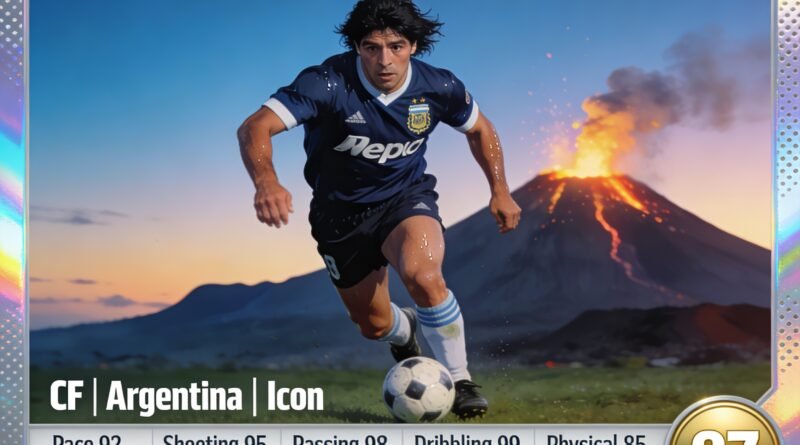
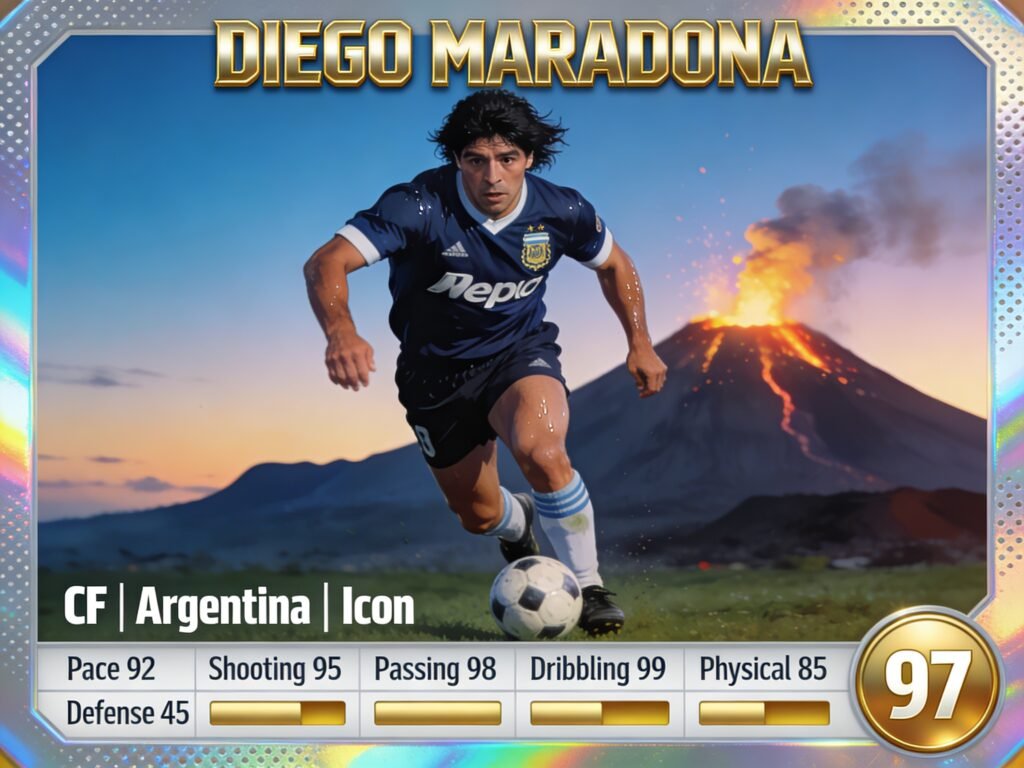
Diego Maradona: El Pibe de Oro
Diego Armando Maradona, “El Pibe de Oro,” emerged from Buenos Aires’ slums, Fiorito, a shack without water or power for eight siblings, as football’s ultimate underdog hero. His low-slung center of gravity, scheming dribbles, and prophetic talent fulfilled a 1928 El Gráfico description of Argentina’s ideal player: a street kid with wild hair and sly eyes. Beyond stats, Maradona symbolized the rage of the forgotten, lifting Napoli and Argentina while battling addiction and controversy.
Humble Beginnings
Born on October 30, 1960, Maradona grew up so poor that his mother faked stomachaches to share scarce food; balls were made from rags, while leather ones were considered “noble.” At 10, he dazzled at Argentinos Juniors trials, performing tricks in halftimes that outshone matches; his youth team won 136 straight games. Debuting at 15 (youngest Argentine international ever), he scored ~116 league goals in four years, shared earnings with teammates, and skipped friendlies over unfair pay—showing early fairness despite indigenous roots facing racism.
Club Journey
At Boca Juniors (workers’ club over elite River Plate), he won a league title before Barcelona’s 1982 record €7.6m move. There, 22 La Liga goals in 20 games dazzled, but Udo Lattek’s drills clashed with his style; homesick, he built an entourage and tried cocaine. Ankle-shattering foul by Bilbao’s Goikoetxea (18-game ban, reduced) led to self-injections and a 1984 Copa del Rey brawl before the King.
Napoli’s 1984 €12m record buy fit perfectly: by rejecting Milan, he called out northern racism and united southern Italy. From relegation battlers, he delivered two Scudetti (1987, 1990), UEFA Cup, Coppa Italia—Napoli’s only majors; fans made him a saint, stadium renamed post-death. Mafia (Camorra) funded it but supplied drugs, fueling parties; 1987-88 title defense suspicions arose after a five-point collapse from five games.
Later: brief Sevilla (1992-93, injury-hit), Newell’s Old Boys (missed Messi’s youth arrival), Boca returns (1995-97, 2001). Transcript notes near-Sheffield United flop over haggling.
International Glory
Skipped the 1978 home World Cup under dictatorship pressure, he won the 1979 U-20 World Cup (best team ever, per him). 1982 Spain: fouled 23 times by Italy’s Gentile alone. Mexico 1986 pinnacle: 5 goals/5 assists, dragging average squad to title; vs. England, “Hand of God” (practiced handball) and 60m solo “Goal of the Century” post-Falklands—four historic minutes. 1990: Neapolitans cheered Argentina over Italy; final loss to Germany.
Peaks and Valleys
Highlights:
- Napoli revolution: from dogshit to powerhouse.
- 1986 WC dominance despite swollen ankle (uneven shoes).
- Teammate elevator: built up Canavaro, Brown scored WC final goal.
Lowlights:
- Drugs ruined life: first cocaine in Barcelona, Napoli enabled via mafia; 15-month ban 1991 (rigged tests).
- 1994 WC: overweight return, ephedrine ban after two games; air rifle on journalists.
- Post-career: 2010 WC antics, health woes; died 2020. Hosts note no Ballon d’Or (pre-non-EU eligibility).
Legacy Impact
Maradona’s footprint towers: aura-farmer, big-game clutch (unlike consistent talents). No modern equivalent—peak Messi tops talent but lacks his chaotic saga. In Naples/Argentina, eternal god; ratings 96-98 all-time. Hosts debate: modern training might boost, but the era fits his free-spirited game.