
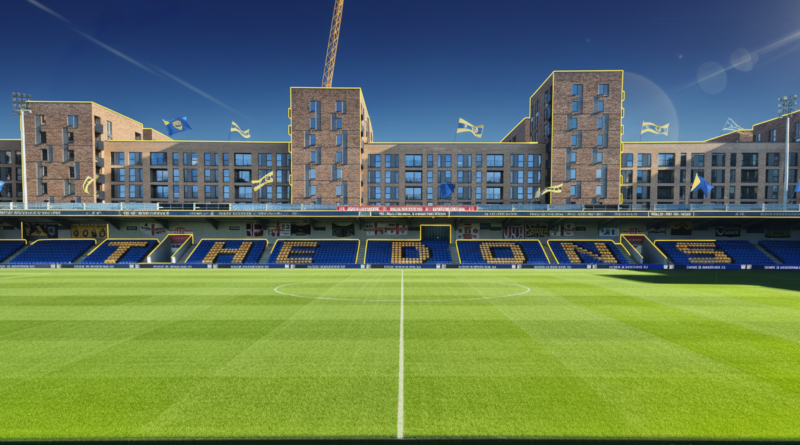
AFC Wimbledon: the club their fans refused to let die.
A club that started again from zero
In south‑west London, AFC Wimbledon now play League football at a new stadium on Plough Lane, a short walk from where the original Wimbledon once stood. The sight of blue and yellow shirts back in Wimbledon feels ordinary today, but it is the product of one of the most radical acts of defiance English football has seen – at the heart of the AFC Wimbledon MK Dons rivalry.
In 2002, Wimbledon’s supporters were told their club was moving 60 miles north to Milton Keynes. The message was clear: follow the team to a new town, or be left with nothing. Instead, thousands of fans chose a third option – they stayed, and built a new club from scratch in the ninth tier.
How Wimbledon FC ended up on the move
To understand why AFC Wimbledon had to be created, you need the story of the old Wimbledon FC. For most of their history they were a small south‑London club, climbing from non‑league into the Football League and eventually the top division. They became famous as the “Crazy Gang”, an awkward, physical side that upset the established order. Their greatest moment came in 1988, when they beat Liverpool in the FA Cup final – a team from a modest ground in Wimbledon toppling one of Europe’s giants.
But glory did not make them rich. Their Plough Lane ground was cramped and outdated, and in 1991 they left to groundshare at Crystal Palace’s Selhurst Park. That “temporary” solution dragged on for years. Crowds were modest, the club had no modern stadium of its own, and by the late 1990s Wimbledon FC were struggling both financially and on the pitch.
Into that mess stepped a new idea: move the club to Milton Keynes, a new town desperate for a professional team. For most English fans, the concept of “relocating” a club like a franchise in American sports was unthinkable. Clubs were supposed to belong to places, not investors’ spreadsheets. Yet the proposal refused to go away.
The decision that sparked the AFC Wimbledon MK Dons rivalry
In 2001–02, a special commission was asked to rule on whether Wimbledon could be moved. Many assumed it would be blocked, to protect the principle that clubs stay rooted to their communities. Instead, the commission approved the relocation, even suggesting that keeping Wimbledon in south‑west London was not in the wider interests of football.
For the people who had stood on the terraces through the club’s rise, that argument felt like a betrayal. The team soon began the process of moving to Milton Keynes, playing “home” games further and further from their original fanbase before fully relocating. In 2004 the relocated club took on a new identity as Milton Keynes Dons, with a fresh badge and colours. On paper, this was a continuation: the same club, rebranded in a new town. In the hearts of those left behind, something entirely different had happened – their club had been taken away, igniting the AFC Wimbledon MK Dons rivalry.
Fans draw a line: the birth of AFC Wimbledon
Faced with that reality, many Wimbledon supporters decided they simply could not follow. Instead, on 30 May 2002, they founded a new club: AFC Wimbledon. If the original team’s league place and stadium were gone, they would start again at the bottom and climb.
The new club was placed in the Premier Division of the Combined Counties League, the ninth tier of English football. Home would be Kingsmeadow in Kingston, a modest ground that looked a long way from the Premier League, but crucially, it was local. Tickets were cheap, the faces in the crowd familiar, and the connection between team and town was immediate.
From the outset, AFC Wimbledon was built on a different principle: the club would be controlled by its supporters. They formed The Dons Trust, a democratic supporters’ trust that would own and oversee the club. Each member had a say in how things were run. It was a quiet revolution: instead of arguing about which billionaire should buy them, fans made themselves the owners.
From park pitches to the Football League
On the pitch, the story moved quickly. AFC Wimbledon were far too big for the ninth tier. Crowds that would not have looked out of place in League football began turning up to tiny non‑league grounds. The team rose through the divisions, picking up promotions in quick succession and turning local derbies into mini‑events as away ends filled with travelling “Dons”.
In 2011, less than a decade after their formation, AFC Wimbledon won promotion from the Conference (now National League) into League Two. They became the first club founded in the 21st century to reach the Football League – a landmark not just for themselves, but for every fan who had been told “you can’t start again”.
The climb did not stop there. In 2016, the club won promotion to League One via the play‑offs at Wembley. For many, that afternoon was the emotional peak: tens of thousands of fans watching a team that had once shared park pitches and small non‑league grounds now winning under the arch, against a backdrop of blue and yellow flags. Fourteen years earlier, they had been starting again from nowhere.
How a fan‑owned club actually works
The Dons Trust is more than a romantic symbol; it is the mechanism that shapes the club day to day. Supporters join the Trust, elect a board, and help decide the broad direction of the club. The aim is not to chase the fastest possible route to the top, but to balance ambition with sustainability.
That means choices a typical owner might find unglamorous: prioritising community schemes, making sure ticket prices remain accessible, and spending within realistic limits. Volunteers play a big part in matchdays and fundraising. At times, supporters have dipped into their own pockets to ensure the club can invest in facilities, youth development or infrastructure.
It is not perfect, and it is not easy. Fan‑owned clubs can be slower to make decisions, and the need for consensus can frustrate those who want immediate results. But AFC Wimbledon’s existence in the professional ranks, under supporter control, is a direct challenge to the idea that only oligarchs or funds can keep a club afloat.
Coming home: back to Plough Lane
As AFC Wimbledon established themselves in the League, a different dream grew louder: going home. Kingsmeadow had served its purpose, but it was never really Wimbledon. The club began exploring ways to build a new stadium back in their traditional borough.
A key step was a difficult one: selling Kingsmeadow to Chelsea, who wanted the ground for their women’s and youth teams. The funds and agreements from that sale formed a crucial part of the financing plan for a new home. Fans backed the move, knowing it was the route back to Wimbledon.
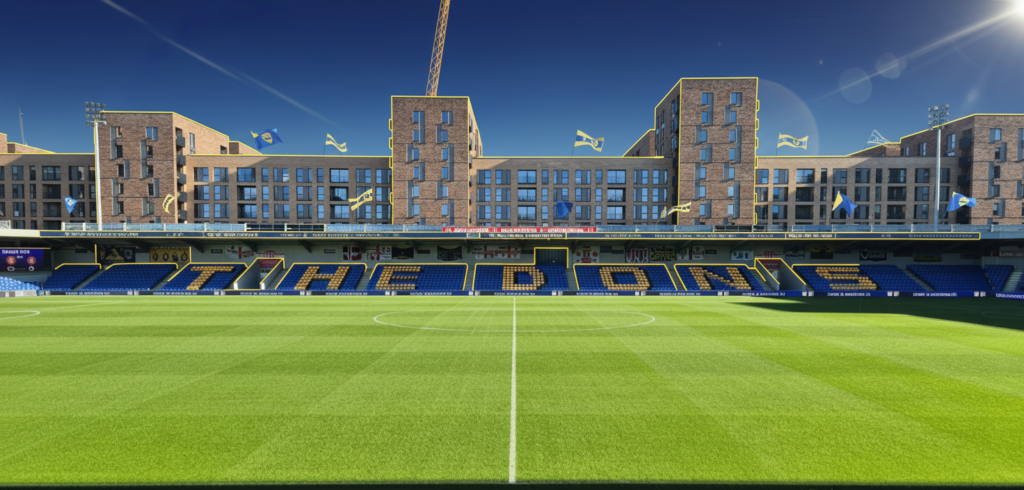
In 2020, after years of planning, the club finally moved into a new stadium on Plough Lane. The ground – modern, compact and designed to expand – stands only a short distance from the site where Wimbledon FC once played. For older supporters, walking up to Plough Lane in club colours again felt like closing a circle. The team that many had been told to forget was back where it belonged.
A rivalry about history, not geography
The AFC Wimbledon MK Dons rivalry is often reduced to a simple grudge match, but it goes deeper than chants and league tables. It is about who has the right to claim the history of Wimbledon FC.
In the years after the move, MK Dons originally held the old club’s honours and records. Under pressure from supporters and wider football opinion, they later agreed to separate their identity from Wimbledon’s past and no longer lay claim to that history. Even so, the wounds remain. For many AFC Wimbledon fans, the use of “Dons” in the Milton Keynes club’s name still feels like a reminder of what was taken.
When the two clubs meet, the tension is not born from local bragging rights but from that unresolved argument about identity. One side emerged from a relocation, the other from a refusal to accept it. Both play professional football; only one claims continuity through fan memory and place.
What AFC Wimbledon tells us about modern football
AFC Wimbledon’s story is often summarised as “phoenix from the ashes”, but it is really a story about ownership and belonging. It shows that a group of supporters, given organisation and patience, can build a professional club from the bottom rung of the pyramid. It also shows that decisions made in boardrooms and commissions can be overturned by ordinary people who simply refuse to let something important disappear.
In an era where many clubs feel like brands angling for global markets, AFC Wimbledon are a reminder that a club can still be rooted in its neighbourhood, run by its fans, and ambitious without being reckless. They may never compete with the financial power of the superclubs – and that is not the point. The point is that when they walk up Plough Lane on a Saturday, the people in blue and yellow know that this team is theirs, because they brought it back into existence.
For a series on club stories, AFC Wimbledon offers a powerful theme: when the game treats clubs like assets, supporters can answer by proving they are something much harder to move – a community that remembers, rebuilds, and comes home.